Research Article | | Peer-Reviewed

The Effect of Post-harvest Treatments on the Shelf Life and Organoleptic Quality of Kola Nuts (Cola Acuminata) Produced in Cameroon: The Case of Dschang

Received: 6 July 2026     Accepted: 21 July 2026     Published: 22 August 2026
Views:       Downloads:
Abstract

The kola nut (Cola acuminata) is an important non-timber forest product in Cameroon, but its shelf life is limited due to its susceptibility to pests and diseases. Current post-harvest treatments, particularly the use of chemical pesticides and certain biopesticides, have been shown to have negative impacts on the organoleptic quality of the kola nut and on consumer health. A multi-month experiment was conducted under laboratory conditions at an average temperature of 24±2°C at the post-production technologies laboratory of the Department of Rural Engineering, with a view to assessing the influence of post-production treatments based on plant-derived biopesticides on the shelf life and organoleptic quality of kola nuts produced in Cameroon. The aim was to assess the effect of a combination of leaf powders from Cymbopogon nardus, Lantana camara and Eugenia caryophyllata on Balanogastris kolae, a pest affecting stored kola nuts. Labelled cylindrical glass jars containing 20 fresh kola nuts (approximately 350 g), to which batches of 15 insects of the same age (from a mass rearing facility) had been added, served as experimental units. As each treatment consisted of a combination of leaf powders from Cymbopogon nardus, Lantana camara and Eugenia caryophyllata at different doses, the experiment involved testing 27 treatments, each repeated three times, giving a total of 81 experimental units, in addition to three control experimental units (batches of kola nuts that had not received any treatment). The results showed that the combination of the three leaf powders—Cymbopogon nardus at 15g per 20 nuts, Lantana camara (10g per 20 nuts) and Eugenia caryophyllata (7.5g per 20 nuts) significantly reduced infestation and the development of Balanogastris kolae, limited mould growth and extended shelf life to more than fifteen months compared with the untreated control. The dose of 15g of C. nardus + 10g of L. camara + 7.5g of E. caryophyllata per 20 kola nuts offers the best efficacy, with an infestation rate of 05% compared with 90% for the control. Organoleptic tests indicate that low to medium doses preserve the typical colour, firmness and bitterness, whilst high doses slightly alter the aroma without compromising overall acceptability. The combination of C. nardus, L. camara and E. caryophyllata therefore constitutes an effective natural alternative to synthetic pesticides, helping to reduce post-harvest losses whilst maintaining the organoleptic quality of Kola acuminata nuts.

Published in American Journal of Agriculture and Forestry (Volume 14, Issue 4)
DOI 10.11648/j.ajaf.20261404.16
Page(s) 217-228
Creative Commons

This is an Open Access article, distributed under the terms of the Creative Commons Attribution 4.0 International License (http://creativecommons.org/licenses/by/4.0/), which permits unrestricted use, distribution and reproduction in any medium or format, provided the original work is properly cited.

Copyright

Copyright © The Author(s), 2026. Published by Science Publishing Group

Keywords

Balanogastris Kolae, Biopesticides, Preservation, Kola Nuts

1. Introduction
Post-harvest loss rates are currently very high throughout the value chain in sub-Saharan Africa, and it is important to take action, given that post-harvest losses have a direct impact on food security, in order to promote the efficient use of natural resources and to safeguard the local economies of smallholder farmers . The organic preservation of kola nuts whilst maintaining their organoleptic qualities is a major challenge that requires particular attention. Organic methods, such as the use of antimicrobial or antifungal plant extracts or beneficial microorganisms, offer a promising alternative to chemicals for controlling infestations and mould . However, previous studies have shown that organic methods may have limitations in terms of efficacy and stability, necessitating further research to optimise their use. Some studies have revealed limitations, particularly in terms of humidity and temperature control, which are key factors in preserving the quality of kola nuts. The production and post-harvest handling of kola nuts take place in hot and humid tropical regions where the risk of mould infection is high. However, kola nuts are so important that even quite mouldy samples are commonly consumed. This is despite the numerous toxic metabolites frequently associated with mould-contaminated foods and the resulting risk to consumers . However, the storage and quality of kola nuts are often affected by pest infestations and spoilage, which can lead to significant losses in terms of both quantity and quality. Storage and quality issues relating to kola nuts are major challenges for producers and consumers . Research by showed that paperboard proved unsuitable for the storage of Cola acuminata and Cola nitida, as germination, colour change, mould growth, the formation of rust-brown spots and damage caused by weevils were significantly higher in paperboard for both varieties of kola nut. Inappropriate post-harvest treatments lead to a loss of quality, a reduction in shelf life and an increase in post-harvest losses. Kola nuts are attacked by weevils, dipterans and fungi, which can cause 30 to 70 per cent of losses during storage . To minimise losses, stakeholders in the kola sector use chemical plant protection products. However, the use of these pesticides causes serious problems for human health and the environment . An assessment of the effect of weevil infestation on the caffeine content of Cola acuminata and Cola nitida was carried out in Nigeria; the results showed a significant decrease in caffeine content with increasing levels of infestation, particularly in Cola acuminata . Average reductions in caffeine content ranged from 8.8 to 62.6 per cent in Cola acuminata and from 18.8 to 25 per cent in Cola nitida. In Cameroon, post-harvest losses are estimated at between 50 and 80 per cent due to weevils and up to 20 per cent due to storage rot . It is absolutely essential to gain a better understanding of the pests’ habitat, feeding habits and reproduction methods, as well as the environmental factors that favour the growth and development of diseases. It is therefore important to preserve the kola nut in order to meet the demands of the national and international markets. Future studies should examine the effects of biological methods on the volatile compounds and active ingredients of Cola acuminata, as well as their impact on sensory quality . In light of the issue raised, the main question that arises is how to help reduce post-harvest losses of kola nuts and improve their shelf. To achieve this, the specific objectives will be: To assess the post-harvest treatments applied to kola nuts; To test and evaluate the efficacy of biopesticides against kola nut pests; To evaluate the impact of different doses of biopesticides on the organoleptic quality of kola nuts.
2. Materials and Methods
2.1. Assessment of Local Preservation Methods for Kola Nuts (Cola Acuminata)
2.1.1. Data Collection
Production areas were selected for the study based on the prevalence of Acuminata kola production. A stratified sampling method was used to select five (05) areas for focused discussions in each area. Questionnaires were administered to producers, retailers, wholesalers, and consumers. The questionnaires were administered through face-to-face interviews, as few respondents could read or write. This method also ensured a 100% response rate for analysis. The data collected from the questionnaires were entered into an Excel spreadsheet.
2.1.2. Questionnaire-Based Survey
The questionnaire for this study consisted exclusively of multiple-choice questions to facilitate respondents’ understanding (Appendix 4). In the presence of the respondent, we took care to ask the questionnaire questions in the simplest possible manner, followed by the answer options, to ensure the respondent’s understanding. This was done with the aim of obtaining detailed explanations regarding post-harvest management practices that affect the quality of kola nuts and the proliferation of pests, in order to gain a precise understanding that would help reduce post-harvest losses.
2.2. Testing and Evaluation of the Efficacy of Bio-Insecticides Against Pests of Kola Nuts (Cola Acuminata)
The efficacy of various bioinsecticides was evaluated using the method described by Finney (1952), based on the linearization of dose-mortality curves. The assessment of efficacy was based on determining the lethal doses and times resulting in 50% mortality among pests of Cola acuminata. The lethal dose 50 (LD50) was estimated graphically from the regression line connecting the probit values corresponding to the corrected mortality rates to the logarithms of the applied doses. This relationship follows the function y = f(x), where y represents mortality at a given exposure time and x represents the various treatment doses.
2.2.1. Preparation of Plant Powders
The plant material consisted of leaves of Cymbopogon nardus, leaves of Lantana camara, and flower buds of Eugenia caryophyllata. These species were harvested in Dschang, Menoua Department, West Region, Cameroon, in March 2025.
After harvesting, the samples were sorted to remove senescent, damaged, or contaminated parts. They were then washed with potable water and drained for 30 minutes. Drying was carried out in an electric dryer at room temperature (25 ± 2°C) for 72 hours on wire mesh racks. Shade drying was preferred to limit photodegradation and the volatilization of active compounds such as citronellal, lantadene, and eugenol.
Each dried sample was ground into a powder using a Moulinex-type electric grinder. The resulting powder was sieved through a 0.5-mm mesh sieve to obtain a uniform particle size distribution. The powders from each species were stored in hermetically sealed amber glass vials, protected from heat and light, until use.
To evaluate the combined effect of the three biopesticides, a ternary mixture was prepared in a mass ratio for 27 experimental doses. To do this, quantities of the three powders were weighed using an analytical balance (accuracy 0.01 g) and mixed manually for 10 minutes in a porcelain mortar until a homogeneous mixture was obtained, to be applied to the 27 experimental units (350 g of kola nuts each) with three replicates.
To assess the individual effect of each biopesticide, a mass ratio of experimental doses was established. To do this, quantities of each type of powder were weighed using an analytical balance (accuracy 0.01 g) and applied to each experimental unit (350 g of kola nuts each).
2.2.2. Determination of the dry Matter Content of the Leaves and Flowers of Biopesticidal Plants
This moisture content will be calculated on a wet basis, as this is the most commonly used method . The dry mass is measured after each wet biopesticide sample has been dried in an oven for 24 hours at a temperature of 105°C. Samples of the leaves and flowers of the biopesticidal plants (Lantana camara, Cymbopogon nardus, and Eugenia caryophyllata) will be placed in stainless steel dishes before being placed in the oven.
2.2.3. Acquisition of Animal Material Mass Rearing of Weevils
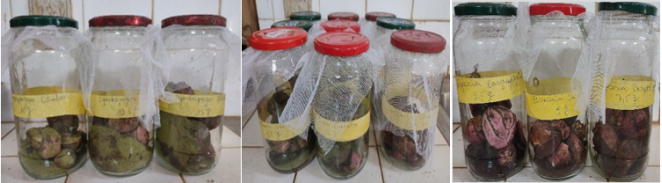
To obtain individuals of the same age, it is necessary to switch to mass rearing, which involves placing individuals of indeterminate age and different sexes together so that they can reproduce. To do this, individuals obtained from an infested batch will be collected using a handheld vacuum and transferred into cylindrical glass jars 17 cm tall and 9 cm in diameter containing the pretreated seeds (Figure 1).
The jars will then be covered with a muslin cloth with a 1-millimeter mesh to allow for ventilation and secured with an elastic band. The jars will be placed on the laboratory bench in the dark for two weeks of fertilization, after which the adults will be removed from the medium; the jars will then be returned to the dark for another two weeks to allow the hatching of young individuals of the same age for the conduct of the experiment.
Figure 1. Mass rearing of bruches.
2.2.4. Setting up the Experimental Setup
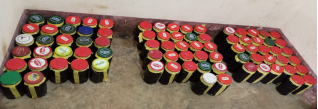
The plant material used in this study this study consists of: Kola acuminta nuts, Lantana camara, Cymbopogon nardus, and Eugenia caryophyllata. Specifically, the parts of interest are the fruits, leaves, and flowers, respectively. Thus, the biocidal effect of the powders from Cymbopogon nardus, Lantana camara, and Eugenia caryophyllata will be evaluated according to the method described by . To carry out this study, a completely randomized experimental design will be used. Cylindrical 900-ml glass jars covered with black plastic (to create darkness inside the jars) and labeled, each containing 20 kola nuts (approximately 350 g) (Figure 2), will serve as experimental units. The experiment will consist of testing 27 treatments, each repeated three times, for a total of 81 experimental units (Table 1), in addition to three control experimental units (batches of kola nuts that received no treatment). Each treatment is a combination of powders from Cymbopogon nardus, Lantana camara, and Eugenia caryophyllata at different doses.
M0: Control treatment
M1: Cymbopogon nardus 10 g: C1
M2: Cymbopogon nardus 12.5 g: C2
M3: Cymbopogon nardus 15 g: C3
M4: Lantana camara 7.5 g: L1
M5: Lantana camara 10 g: L2
M6: Lantana camara 12.5 g: L3
M7: Eugenia caryophyllata 2.5 g: E1
M8: Eugenia caryophyllata 5 g: E2
M9: Eugenia caryophyllata 7.5 g: E3
Table 1. Experimental design.

C3L2E1

C2L1E3

C1L2E2

C3L1E3

C2L3E1

C3L3E2

C2L2E2

C2L3E2

C3L1E1

C2L3E3

C3L2E1

C3L2E3

C2L1E3

C3L3E3

C2L3E2

C2L3E1

C2L3E3

C2L1E3

C2L2E3

C3L3E1

C2L2E2

C2L3E2

C3L2E3

C2L3E1

C3L1E1

C3L3E2

C2L3E3

C1L2E2

C3L1E3

C3L2E1

C3L3E1

C3L1E1

C3L3E3

C3L2E3

C2L2E3

C3L3E1

C3L3E2

C2L2E2

C3L1E3

C3L3E3

C1L2E2

C2L2E3

C2L1E1

C1L3E3

C1L2E2

C2L2E1

C1L3E2

C1L1E3

C2L1E2

C1L2E3

C1L1E1

C1L3E3

C1L2E1

C2L2E1

C1L3E2

C2L1E1

C1L1E2

C1L3E1

C3L1E2

C1L2E1

C1L2E3

C2L1E2

C1L3E2

C1L2E1

C1L1E2

C2L1E1

C3L2E2

C2L2E1

C1L3E3

C1L1E3

C1L3E1

C3L1E2

C1L1E2

C1L1E1

C1L2E3

C3L1E2

C1L1E3

C2L1E2

C1L1E1

C1L2E2

C1L3E1

Each experimental unit consisted of a batch of 350g of fresh, healthy Cola acuminata nuts that were uniform in size and free of initial infestation. The nuts were treated by dry coating. To do this, the amount of powder corresponding to each dose was mixed with the nuts in a glass jar for three minutes to ensure good adhesion of the powder to the surface of the nuts. The control batch M0 underwent the same procedure without the addition of powder.
After treatment, the jars were sealed and stored in a room at room temperature (25 ± 2°C) and relative humidity (75±5%) for one month. The arrangement of the experimental units into three blocks neutralized the effect of any temperature or humidity gradients in the storage room. Within each block, the twenty-seven treatments were randomly assigned.
Observations were conducted at 30-day intervals throughout the storage period. The parameters measured were: infestation rates by Balanogastris kolae and Sophrorhinus spp., mold incidence, moisture content of the nuts, angle of repose, and organoleptic quality.
Figure 2. Experimental design.
(i). Mortality and Resistance Rates of Balanogastris Kolae
The mortality rate or lifespan of Balanogastris kolae will be assessed daily throughout the experimental period. The contents of each box will be emptied onto the laboratory bench so that dead weevils can be removed using metal tweezers. Any individual showing no reaction in its legs or antennae after being touched several times with the tweezers will be considered dead. At the end of each procedure, the equipment will be wiped with a white cloth to prevent interference from different substances. The mortality rate is given by Equation (1):
Mc = 100.Mo - Mt 100-Mt(1)
Where:
Mc= Corrected mortality as a percentage
Mo = Mortality observed in the experiment
Mt =Mortality observed in the control
(ii). Emergence Rate of the First Generation
In order to determine whether the powders and doses have any effect on the fertility of the females, the eggs laid and, consequently, subsequent generations of Balanogastris kolae, a weekly count will be carried out of the individuals that have emerged after egg-laying one month after the start of the trial, and these will be removed. Once emergence is complete, the percentage reduction in adults, or inhibition rate, will be calculated using Equation (2) :
%RE = 100.(Cn - Tn) Cn(2)
Where:
%RE= Percentage reduction in adults or inhibition rate
Cn= Number of newly emerged adults in the control treatment
Tn= Number of newly emerged adults in the other treatments
(iii). Number of Holes and Number of Perforated Kola Nuts (Cola acuminata)
To determine whether the powders and doses had any effect on the number of holes that appeared after one month and the number of nuts affected after the start of the experiment, a count was conducted of the number of holes that appeared after one month and the number of nuts affected when the first generation emerged after the start of the experiment.
(iv). Data Processing and Statistical Analysis
The various data collected were entered into Microsoft Excel, and statistical analyses were performed using SPS Statistics software, version 23. To test the effect of the different powders and doses, an analysis of variance (ANOVA) was conducted, followed by Duncan’s multiple range test at p < 0.0001 for the means.
2.3. Assessment of the Impact of Different Biopesticide Doses on the Organoleptic Characteristics of Cola acuminata Nuts
It is essential to determine the postharvest quality of marketable kola nuts in order to develop grading standards for the nuts and to evaluate the impact of different treatment doses on the organoleptic characteristics of kola nuts, taking into account the following evaluation criteria: color, taste, luster, browning, aging, and texture.
2.3.1. Color of the Kola Nut (Cola acuminata)
During storage, we observed variations in the color of the kola nuts depending on the treatment dose. Using a colorimeter, we determined their colors by operating a chromatograph placed near the products and carefully observing the color variations.
2.3.2. Moisture Content of the Kola Nut (Cola acuminata)
Moisture content is the ratio of the difference between the mass of the wet product and the mass of the dry product to the mass of the wet product. This moisture content was calculated using Equation (3) on a wet basis, as this is the most commonly used method .
Mc=100.Wc-WdWd (3)
Where:
Mc= Moisture content
Wc= Mass of fresh kola nuts
Wd= Mass of kola nuts after oven-drying
3. Results
3.1. Assessment of Local Kola Nut (Cola acuminata) Storage Systems
3.1.1. Characteristics of Respondents
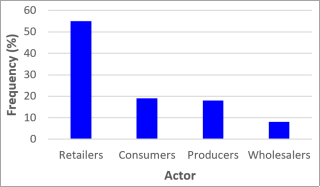
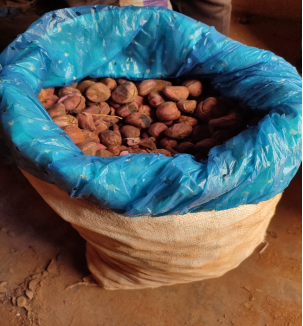
Survey results indicate that the production of Cola acuminata spans the entire Western Region. However, retail sales are primarily concentrated in departmental capitals. We surveyed 55% of retailers, 19% of consumers, 18% of producers, and 8% of wholesalers across all the various production basins in the Western Region (Figure 3). Acuminata kola is first packaged in perforated blue polyethylene bags and then in 50-kg polypropylene bags for storage on shelves or directly on the floor in warehouses for a period ranging from 6 months to 1 year. After this storage period, the product can be used either for consumption or as seed.
Figure 3. Breakdown of the survey by stakeholders.
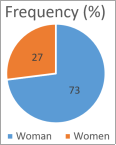
According to the field surveys, the number of female respondents exceeds that of male respondents (Figure 4).
Figure 4. Distribution of Respondents by Gender.
This figure shows the distribution of respondents by gender. It reveals that 73% of those involved in the kola nut industry are woman, compared to 27% women. This finding indicates a strong involvement of women in activities related to this trade, particularly in harvesting and marketing. This predominance of women could be explained by the fact that these activities are often carried out on a small scale, at home or in markets, which is consistent with the economic and social responsibilities generally assumed by women in rural areas.
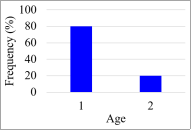
Figure 5 shows the distribution of small-scale kola producers by age group.
Figure 5. Distribution of survey respondents by age group.
It is noted that the majority (approximately 80%) of those involved in the preservation of Kola acuminata are between 21 and 55 years old, while a minority (approximately 20%) are over 55. This indicates that activities related to the preservation of Kola acuminata are primarily carried out by the working-age population, who are likely to be more physically capable and more open to adopting new conservation techniques.
3.1.2. Harvesting and Preservation Processes
Table 2 presents the distribution of Acuminata kola nut harvesting periods as a percentage. It highlights the months most commonly cited by stakeholders for harvesting. The April–June period (63.2%) is the most common, indicating that the majority of producers harvest Acuminata kola nuts during this season. In contrast, the January–March period (4.3%) is very underrepresented, likely due to unfavorable climatic conditions or ripening patterns.
Table 2. Harvest periods for Acuminata kola.

Harvest periods

Frequency (%)

april-june

63.2

july-september

19.6

september-november

12.9

january-march

4.3

Based on all these studies, the preservation techniques used in the Western Region are as follows:
Extraction of Acuminata kola nuts after harvesting the pods in the field, splitting them open, and then fermenting them;
Washing and spreading the Acuminata kola nuts on a bag and then on a shelf after extracting the seeds from the pod;
Placing the seeds in a white polyethylene bag after ensuring that the bag contains no water and has no openings that could let air in, then securely tying the bag’s opening to prevent air from entering the product;
The bag is placed on a shelf in a cool location, protected from light and heat.
Table 3 shows the various containers used for storing Acuminata kola nuts in the Western Region, as well as their frequency of use as a percentage.
Table 3. Different storage containers.

Containers

Frequency (%)

Polyethylene bag

19.9

Polypropylene bag

10.3

Polyethylene and polypropylene bag

69.9

Most stakeholders prefer a combination of the two materials (polyethylene and polypropylene) to ensure better preservation of Acuminata kola nuts by limiting losses due to moisture or product deterioration (Figure 6).
Figure 6. Combination of polyethylene and polypropylene bags for the preservation of kola nuts.
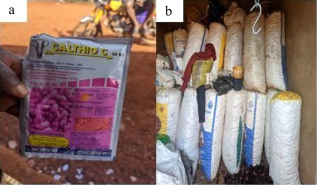
The questionnaires administered provided insight into how kola nut producers and traders proceed step by step to try to obtain a product of commercial quality. These surveys also revealed that young people are increasingly abandoning this crop due to the complexity of kola nut preservation methods. We also noted that the main harvest period extends from April through June. Most producers allow the kola pods to fall on their own before collecting them, due to their advanced age and the risks involved in climbing the tree to harvest them. After shelling, most producers treat the kola nuts with a chemical (in powder form) called “CALTHIO C” (Figure 7a) and store them for about six to twelve months (Figure 7b), which significantly alters the organoleptic qualities of the kola nuts. These kola nuts are not only sold domestically but also exported to countries in West and North Africa. By the end of this process, approximately 40% of the kola nuts are lost, and of the remaining 60%, most are exported.
a = treatment with CALTHIO C; b = storage of kola nuts

Download: Download full-size image

Figure 7. Phytosanitary treatment and storage of kola nuts.
3.2. Efficacy of Biopesticides Against Pests of the Kola Nut (Cola acuminata)
3.2.1. On the Mortality Rate of B. kolae
Analysis of Table 4 reveals that doses of L. camara at 7.5 g and 10 g, as well as those of C. nardus at 15 g, 10 g, and 17.5 g, resulted in highly significant differences in the pest’s mortality rate (p < 0.0001). The highest mortality rates were observed early on: 0.66 ± 0.2 as early as day 1 with L. camara at 7.5 g/20 nuts, and 0.33 ± 0.2 on day 2 with C. nardus at 15 g/20 nuts. Other significant peaks were observed later, notably on the 2nd, 19th, and 20th days for C. nardus at 15 g/20 nuts, on the 9th day for L. camara at 7.5 g/20 nuts, and on the 17th day for C. nardus at 15 g/20 nuts.
Table 4. Effect of powders on the mortality rate of B. kolae.

T

T0

T1

T2

T3

T4

T5

T6

J1

0,00±0,0a

0,00±0,0a

0,33±0,4b

0,00±0,0a

0,33±0,4b

0,33±0,4b

0,66±0,4c

J2

0,00±0,0a

0,00±0,0a

0,00±0,0a

0,33±0,2b

0,00±0,0a

0,00±0,0a

0,00±0,0a

J3

0,00±0,0a

0,00±0,0a

0,00±0,0a

0,66±0,2c

0,00±0,0a

0,00±0,0a

0,33±0,1b

J4

0,00±0,0a

0,00±0,0a

0,33±0,1b

0,00±0,0a

0,00±0,0a

0,00±0,0a

1,00±0,4bc

J5

0,00±0,0a

0,00±0,0a

0,33±0,1b

0,66±0,1c

0,00±0,0a

0,33±0,1b

0,33±0,1b

J6

0,00±0,0a

0,00±0,0a

0,33±0,1b

0,66±0,2c

0,00±0,0a

0,33±0,1b

0,33±0,1b

J7

0,00±0,0a

0,00±0,0a

0,00±0,0a

0,00±0,0a

0,00±0,0a

0,33±0,1b

0,33±0,1b

J8

0,00±0,0a

0,00±0,0a

0,33±0,1b

0,66±0,2c

0,33±0,1b

0,00±0,0a

0,33±0,1b

J9

0,00±0,0a

0,00±0,0a

0,00±0,0a

0,00±0,0a

0,00±0,0a

0,00±0,0a

0,66±0,2c

J10

0,00±0,0a

0,00±0,0a

0,00±0,0a

0,33±0,1b

0,33±0,1b

0,33±0,1b

0,00±0,0a

J11

0,00±0,0a

0,66±0,2b

0,00±0,0a

0,33±0,1b

0,00±0,0a

0,00±0,0a

0,00±0,0a

J12

0,00±0,0a

0,00±0,0a

0,00±0,0a

0,00±0,0a

0,00±0,0a

0,33±0,1b

0,33±0,1b

J13

0,00±0,0a

0,00±0,0a

0,33±0,1b

0,66±0,2c

0,00±0,0a

0,00±0,0a

0,00±0,0a

J14

0,00±0,0a

0,00±0,0a

0,00±0,0a

1,00±0,1bc

0,00±0,0a

0,33±0,1b

0,00±0,0a

J15

0,00±0,0a

0,00±0,0a

0,33±0,1b

0,33±0,1b

0,00±0,0a

0,00±0,0a

0,33±0,1b

J16

0,00±0,0a

0,00±0,0a

0,00±0,0a

0,33±0,1b

0,33±0,1b

0,00±0,0a

0,33±0,1b

J17

0,00±0,0a

0,00±0,0a

0,33±0,1b

0,00±0,0a

0,00±0,0a

0,00±0,0a

0,00±0,0a

J19

0,00±0,0a

0,00±0,0a

0,00±0,0a

1,00±0,3bc

0,00±0,0a

0,00±0,0a

0,00±0,0a

J20

0,00±0,0a

0,00±0,0a

0,00±0,0a

0,33±0,1b

0,00±0,0a

0,00±0,0a

0,00±0,0a

Identical letters in the column labels are not significant at p < 0.001 according to Duncan’s test.
T0 = Negative control, T1 = C. nardus 10 g, T2 = C. nardus 12.5 g, T3 = C. nardus 15 g, T4 = L. camara 2.5 g, T5 = L. camara 5 g, T6 = L. camara 7.5 g, D = Days.
3.2.2. Lethal Dose 50 (LD50)
Estimates of the 50% lethal doses of C. nardus and L. camara powders, which presents the linear regression equations used to obtain the LD50 values for kola nut preservation. The results show positive and significant correlations (R2≥ 0.9) between the adjusted mortality rate and the tested doses in all cases. The LD50 values in our study depend on the doses and types of powders used. The lowest LD50 value reflects the high toxicity of the treatments against Balanogastris kolae. From this perspective, L. camara exhibited the lowest LD50 (17.5 g) and a high mortality rate, whereas C. citratus exhibited the highest LD50 (12.5 g) and a low mortality rate.
3.2.3. Emergence Rate of the First Generation
Table 5 shows the effect of different doses of C. nardus and L. camara powders on the inhibition of Balanogastris kolae emergence over time. The results show that the number of emerged B. kolae adults varies very significantly (p<0.0001) depending on the dose of powder applied and the duration of storage. Emergence of B. kolae was observed between the 14th and 21st day, regardless of the dose and the powder’. Among the doses tested, those of 15 g of C. nardus per 20 nuts, 7.5 g of L. camara per 20 nuts, and 10 g of L. camara per 20 nuts significantly inhibited the emergence of B. kolae compared to the other doses. This inhibitory effect was more pronounced on the 14th day of storage.
Table 5. Effect of powders on the emergence of Balanogastris kolae.

T

D14

D21

T0

5,33±0,2abc

8,00±0,3abc

T1

2,67±0,4ab

3,00±0,2ab

T2

8,00±0,2bc

10,67±0,6bc

T3

10,33±0,4c

13,00±0,7c

T4

4,67±0,5abc

5,67±0,8abc

T5

0,67±0,1a

0,67±0,1a

T6

1,67±0,2a

2,3±0,2ab

3.2.4. Number of Holes and Number of Perforated Kola Nuts (Cola acuminata)
(i). Number of Holes Drilled in the Kola Nut
The results regarding the effect of different doses of C. citratus and L. camara powders on the number of holes perforated in kola nuts are presented in Table 6. The results show that, regardless of the dose and type of powder used, the first perforations in kola nuts caused by Balanogastris kolae appear starting on the 7th day. The number of holes varies very significantly (p<0.0001) depending on the duration of exposure and the doses applied. This number is lowest on the 7th day and reaches its peak on the 21st day. Treatments with L. camara at doses of 7.5 g/20 nuts and 10 g/20 nuts recorded the significantly lowest number of holes (p < 0.0001) throughout the entire experimental period. No holes were observed on the 7th day for these doses, and the increase in the number of holes remained moderate between the 14th and 21st days.
Table 6. Effect of powders on the number of holes.

T

D7

D14

D21

T0

1,33±0,3b

5,33±0,6b

11,67±0,4c

T1

0,67±0,2ab

2,67±0,5ab

2,67±0,2ab

T2

1,00±0,2b

5,33±0,3b

4,00±0,2ab

T3

1,33±0,2b

4,67±0,3ab

6,00±0,4b

T4

1,33±0,2b

4,00±0,2ab

3,33±0,2ab

T5

0,00±0,0a

1,67±0,3ab

0,33±0,1a

T6

0,00±0,0a

1,33±0,2a

2,67±0,3ab

Identical subscripts in the columns indicate no significant difference at p < 0.0001 according to Duncan’s test.
T0 = Negative control, T1 = C. nardus 10 g, T2 = C. nardus 12.5 g, T3 = C. nardus 15 g, T4 = L. camara 2.5 g, T5 = L. camara 5 g, T6 = L. camara 7.5 g, D = Days.
(ii). Number of Perforated Nuts
Table 7 shows the change over time in the number of kola nuts perforated by Balanogastris kolae after treatment with different doses of C. citratus and L. camara powders. The number of perforated nuts varied very significantly (p<0.0001) depending on the doses of powder applied. The dose of 7.5 g of L. camara per 20 nuts resulted in the significantly lowest number of perforated nuts (p < 0.0001), with no perforations at all observed by the 14th day. With the exception of the negative control, which recorded the highest perforation rate, the doses of 15 g of C. nardus per 20 nuts and 7.5 g of L. camara per 20 nuts also showed a relatively high number of perforated nuts.
Table 7. Effect of powders on the number of perforated nuts.

T

D7

D14

D21

T0

2,67±0,2c

1,33±0,4c

1,33±0,2b

T1

0,67±0,2a

0,67±0,2ab

1,33±0,2b

T2

1,33±0,1a

1,00±0,1bc

1,33±0,3b

T3

1,33±0,2a

1,00±0,2bc

0,33±0,1ab

T4

2,33±0,4bc

0,33±0,1ab

0,67±0,2ab

T5

1,00±0,2a

0,00±0,0a

0,00±0,0a

T6

1,67±0,4ab

0,33±0,1ab

0,67±0,2ab

Identical subscripts in the columns indicate no significant difference at p < 0.0001 according to Duncan’s test.
T0 = Negative control, T1 = C. nardus 10 g, T2 = C. nardus 12.5 g, T3 = C. nardus 15 g, T4 = L. camara 2.5 g, T5 = L. camara 5 g, T6 = L. camara 7.5 g, D = Days.
3.3. Evaluation of Biopesticide Dosages on the Organoleptic Qualities of Kola Nuts (Cola acuminata)
The color of red kola nuts after several weeks of storage in dark jars showed a significant difference in lightness. Thus, as shown in Table 8, the nuts stored in transparent jars without being coated with black plastic exhibited a significant color change (from pink to greenish) due to exposure to light. However, this light exposure decreased statistically over the course of storage for all samples due to coating with biopesticide powders and a reduction in moisture content.
Laboratory Analysis of Kola Nuts
The kola nut samples were analyzed at the FAAS (Faculty of Agronomy and Agricultural Sciences) Nutrition Laboratory prior to the start of the experiment. Table 9 presents the physicochemical characteristics of the small kola nuts after the experiment; the analysis was repeated twice.
Table 8. Physicochemical characteristics of kola nuts prior to the experiment.

Characteristics

Ash (%)

Fat (%)

Crude protein (%)

Cellulose (%)

Tannin (%)

Sugar and starch (%)

Caffeine (%)

Moisture content (%)

Repeat1

3

1,4

9,5

7

3,8

45

2,8

13,5

Repeat 2

3,05

1,66

9,52

6,80

3,75

46

3

13,45

At the end of the experiment, samples from the 27 kola nut treatments were analyzed in the same FASA Nutrition Laboratory. Table 9 presents the physicochemical characteristics of the small kola nuts after the experiment.
Table 9. Physicochemical characteristics of kola nuts after the experiment.

T

Ash (%)

Fat (%)

Crude protein (%)

Cellulose (%)

Tannin (%)

Sugar and starch (%)

Caffeine (%)

Moisture content (%)

T1

2,27

1,73

9,015

6,915

3,215

44,30

2,9

11,66

T2

2,75

1,825

9,055

6,960

3,897

45.33

2,9

9,09

T3

2,85

1,735

9,621

6,425

3,645

45,68

3

12,78

T4

2,81

1,635

9,611

6,785

3,568

44,25

3

10,12

T5

2,85

1,835

9,262

6,785

3,275

44,89

3

11,93

T6

2,85

1,160

9,765

6,975

3,589

45,16

3

10,29

T7

3,26

1,704

9,591

6,875

3,572

45,07

2,8

10,77

T8

3,16

1,835

9,590

6,455

3,045

45,79

2,89

12,39

T9

3,26

1,704

9,255

6,808

3,495

45,60

3

12,34

T10

2,62

1,841

9,925

6,529

3,665

45,99

2,95

11,56

T11

2,55

1,745

9,430

6,805

3,685

45,26

2,84

12,40

T12

2,47

1,83

9,105

6,865

3,519

44,81

3

11,66

T13

2,55

1,825

9,145

6,960

3,897

45.33

2,93

9,09

T14

2,85

1,735

9,721

6,425

3,645

45,68

3,18

12,78

T15

2,81

1,635

9,611

6,785

3,568

44,25

3

10,32

T16

2,85

1,835

9,282

6,785

3,285

44,89

2,85

11,93

T17

2,85

1,172

9,795

6,975

3,589

45,16

3

10,89

T18

3,26

1,704

9,591

6,875

3,572

45,07

2,82

10,77

T19

3,16

1,695

9,590

6,455

3,045

45,79

2,89

10,89

T20

3,26

1,474

9,255

6,808

3,495

45,60

3

12,57

T21

2,62

1,641

9,981

6,529

3,665

45,99

2,95

11,56

T22

2,55

1,782

9,733

6,805

3,685

45,26

2,84

11,63

T23

2,85

1,735

9,055

6,960

3,897

44,81

2,85

10,83

T24

2,85

1,635

9,621

6,425

3,645

45.33

3

10,89

T25

3,26

1,835

9,611

6,785

3,568

45,68

2,92

10,77

T26

3,16

1,172

9,262

6,785

3,285

44,25

2,99

11,99

T27

3,26

1,704

9,765

6,975

3,589

44,89

3

12,17

4. Discussion
Kola nuts are frequently attacked during storage by Balanogastris kolae, the primary pest affecting this commodity. To control this pest, the use of plants with insecticidal properties is commonly recommended . The results show that powders of C. nardus at 15 g/20 nuts (0.33 ± 0.2); L. camara at 7.5 g/20 nuts (0.66 ± 0.2), and E. caryophyllata at 7.5 g/20 nuts (0.44 ± 0.2) resulted in the highest mortality rates, two days and one day after treatment, respectively. The mortality rate of B. kolae varied very significantly (p<0.0001) over time. Peak mortality rates were observed on the 2nd, 17th, 19th, and 20th days with a dose of 15 g of C. nardus, on the 9th day with 7.5 g of L. camara, and on the 17th day with 15 g of C. nardus. These results indicate that doses of 7.5 g of L. camara, 7.5 g of E. caryophyllata, and 15 g of C. nardus are effective against B. kolae during storage.
Furthermore, L. camara had the lowest LD₅₀ (7.5 g), while C. nardus had the highest LD₅₀ (15 g). The dose of 12.5 g of L. camara thus resulted in the highest mortality rate. The toxic and repellent effects of these powders may be related to their chemical composition and the degree of sensitivity of B. kolae . These observations corroborate those of , who reported that leaf powder from L. camara effectively contributes to the preservation of the organoleptic quality of nuts, grains, and fruits, while positively influencing their germination rates.
Damage assessment showed that the number of perforated nuts and the number of holes per nut varied significantly (p<0.0001) depending on the doses and storage duration. No perforations were observed on the 7th day with doses of 10 g and 12.5 g of L. camara per 20 nuts. The number of holes was minimal on the 7th day and maximal on the 21st day. Apart from the negative control, the doses of 10 g of C. nardus per 20 nuts and 7.5 g of L. camara per 20 nuts showed the highest levels of perforation. Based on these results, the use of 10 g of L. camara powder per 20 nuts is recommended for controlling B. kolae during storage.
Finally, the emergence of B. kolae was significantly influenced (p<0.0001) by the powder dose and storage time. It occurred between the 14th and 21st day, regardless of the dose. Doses of 15 g of C. nardus per 20 nuts, 7.5 g of L. camara per 20 nuts, and 7.5 g of E. caryophyllata per 20 nuts significantly inhibited the emergence of B. kolae compared to the other doses. This inhibitory effect was particularly pronounced on the 14th day. Tshimenga et also demonstrated that powders of C. nardus and L. camara exhibit inhibitory activity against the emergence of pests in stored seeds and nuts.
5. Conclusions
The aim of this study was to evaluate the efficacy of combined powders of Cymbopogon nardus, Lantana camara and Eugenia caryophyllata for the preservation of Cola acuminata nuts produced in Cameroon. The main results obtained allow the following conclusions to be drawn:
On biopesticidal efficacy
The choice of these three species is based on their complementary modes of action: a repellent effect for Cymbopogon nardus, an anti-nutritional and ovicidal effect for Lantana camara, and an antifungal effect for Eugenia caryophyllata. The combination of powders from Cymbopogon nardus, Lantana camara and Eugenia caryophyllata significantly reduces post-harvest losses. A dose of 15g of C. nardus + 10g of L. camara + 7.5g of E. caryophyllata per 20 kola nuts proved to be the most effective, limiting infestation by Balanogastris kolae to 05% compared with 94% in the control group.
On storage
This combination extends the shelf life of the nuts to over 15 months at room temperature, compared with less than 20 days for the untreated control whilst limiting the growth of mould.
On organoleptic quality
Low to medium doses preserve the essential attributes of kola: colour, firmness and characteristic bitterness. High doses slightly alter the aroma without compromising overall consumer acceptability.
On the sustainable alternative
The use of these local, abundant and inexpensive plants provides a credible natural alternative to synthetic pesticides. It meets food safety and environmental protection requirements for Cameroonian producers.
Following this research, we confirm that the utilisation of indigenous plant resources such as C. nardus, L. camara and E. caryophyllata is a sustainable approach to securing the kola supply chain, reducing post-harvest losses and maintaining the product’s organoleptic quality.
Abbreviations

FAAS

Faculty of Agronomy and Agricultural Sciences

Author Contributions
Michel Mongoue Feuze: Conceptualization, Writing – original draft, Writing – review & editing
Henri Grisseur Djoukeng: Supervision, Resources
Roger Cesaire Ntankouo Njila: Resources
Sibelle Mouafo Tsague: Resources
Conflicts of Interest
The authors declare no conflicts of interest.
References
[1] La Fondation Rockefeller., (2015). Perspectives for Reducing Post-Harvest Losses of Agricultural Products in Africa.
[2] Irwin, S., (2015). Kola nut: A review of its chemical constituents and pharmacological properties. Journal of medicinal food, 18(10): 1039-1047.
[3] Atanda, S. A. Pessu P. O., Agoda S., Isong I. U., Ikotun, (2011). Concepts and problems of post-harvest food losses in perishable crops. African Journal of Food Science; Vol. 5 (11): 603-613.
[4] Kouakou, K. E., Kouadio, L. P., Kouassi, K. K. (2015). Physico-chemical characteristics of kolanuts (Cola nitida) from Côte d'Ivoire. Journal of Food Science and Technology, 52(2), 817-823.
[5] Adeleye, J. O., Adeteye, O. S., Adewuyi, M. O., (2015). Impact of international trade on economic growth in Nigeria. International journal of financial research, 6, 163-172.
[6] Dembele, A., Traore, S. K., Kooe M., Konate, D., Toure, A. A., (2008). Chemical control of kola nut preservation: quality management and compliance with phytosanitary regulations. European Journal of Scientific Research, 19: 568-575.
[7] Biego, H. M. G., Yao, D. K., Ezoua, P., Chatigre, O. K., Kouadio, L. P., (2009). Levels of contamination by organochlorine pesticides in Cola nitida nuts. Int. Journal of Biological and Chemical Sciences. 3(6): 1238-1245.
[8] Lale, N. E. S., Okunade S. O., (2000). Effect ofweevil infestation on the caffeine content of stored kolanuts (Cola nitida Schott Vent. et Endl.) in Maiduguri, Nigeria. Zeitschriftfuer Pflanzenkrankheiten und Pflanzenschutz, 107: 88-92.
[9] Ndoye, O., Perez, M. R., Eyebe, A., (1997). The market of non-timber forest products in the humid forest zones of Cameroon. Rep. No. 22c. Overseas Development lnstitute, London.
[10] Odeyemi, E. F., Ogunsowo, A. O., Akinola, C. O., Jayeola, C. O., Olorundare, B. O., (2017). Comparison of some in vitro antioxidant properties of the fruit testas of Cola acuminata and Cola nitida. Asian Journal of Research in Agriculture, Volume 16(3): 64-73.
[11] Rombi, M., (1991). 100 Medicinal Plants. Composition, Mode of Action and Therapeutic Interest. Éd. Romard, Nice.
[12] Asogwa, E. U., Ndubuaku, T. C. N., Awe, O. O., Mokwunye, I. U., (2014). Leaf powders utilization for Cola nitida protection against kola weevils (Balanogastris kolae and Sophrorhinus spp.) in storage. Kola Research Programme, Cocoa Research Institute of Nigeria, Ibadan, Oyo State, Nigeria. Biology Department, Adeyemi College of Education, Ondo, Ondo State, Nigeria, Vol. 8(45), 1304-1309.
[13] Idoko, J. E., Adesina, J. M., (2012). Evaluation of Piper guineense powder and pirimiphos-methyl for the control of the cowpea beetle Callosobruchus maculatus (F.). Journal of Agricultural Technology, 8(4): 1365-1374.
[14] Mokwunye, F. C., Odebiyi, J. A., Adekunle, V. A. J., (2015). Assessment of aqueous plant extract for the control of kola weevils (Balanogastris kolae and Sophrorhinus spp) in stored cola nitida. European Journal of Medicinal Plants, 7(4): 1-9.
[15] Casida, J. H., (1990). Pesticide mode of action, evidence for implications of a finite number of biochemical targets. In: Casida J. E. (ed.). Pesticides and alternatives. Innovative chemical and Biological Approaches to Pest Control. Amsterdam: Elsevier, pp. 11-22.
[16] Bennia, F., (2019). Effect of essential oils from some medicinal plants on the sanitary and organoleptic quality of dates. Master’s Thesis, University of Biskra, Algeria.
[17] Tshimenga, T., Ndembo, L., Kizungu, R., Haubruge, E., (2018). Effectiveness of plant powders in controlling Sitophilus zeamais Motsch. on stored maize in the DRC. Journal of Applied Biosciences, 122, 12234-12245.
Cite This Article
  • APA Style

    Feuze, M. M., Djoukeng, H. G., Njila, R. C. N., Tsague, S. M. (2026). The Effect of Post-harvest Treatments on the Shelf Life and Organoleptic Quality of Kola Nuts (Cola Acuminata) Produced in Cameroon: The Case of Dschang. American Journal of Agriculture and Forestry, 14(4), 217-228. https://doi.org/10.11648/j.ajaf.20261404.16

    Copy | Download

    ACS Style

    Feuze, M. M.; Djoukeng, H. G.; Njila, R. C. N.; Tsague, S. M. The Effect of Post-harvest Treatments on the Shelf Life and Organoleptic Quality of Kola Nuts (Cola Acuminata) Produced in Cameroon: The Case of Dschang. Am. J. Agric. For. 2026, 14(4), 217-228. doi: 10.11648/j.ajaf.20261404.16

    Copy | Download

    AMA Style

    Feuze MM, Djoukeng HG, Njila RCN, Tsague SM. The Effect of Post-harvest Treatments on the Shelf Life and Organoleptic Quality of Kola Nuts (Cola Acuminata) Produced in Cameroon: The Case of Dschang. Am J Agric For. 2026;14(4):217-228. doi: 10.11648/j.ajaf.20261404.16

    Copy | Download

  • @article{10.11648/j.ajaf.20261404.16,
      author = {Michel Mongoue Feuze and Henri Grisseur Djoukeng and Roger Cesaire Ntankouo Njila and Sibelle Mouafo Tsague},
      title = {The Effect of Post-harvest Treatments on the Shelf Life and Organoleptic Quality of Kola Nuts (Cola Acuminata) Produced in Cameroon: The Case of Dschang},
      journal = {American Journal of Agriculture and Forestry},
      volume = {14},
      number = {4},
      pages = {217-228},
      doi = {10.11648/j.ajaf.20261404.16},
      url = {https://doi.org/10.11648/j.ajaf.20261404.16},
      eprint = {https://article.sciencepublishinggroup.com/pdf/10.11648.j.ajaf.20261404.16},
      abstract = {The kola nut (Cola acuminata) is an important non-timber forest product in Cameroon, but its shelf life is limited due to its susceptibility to pests and diseases. Current post-harvest treatments, particularly the use of chemical pesticides and certain biopesticides, have been shown to have negative impacts on the organoleptic quality of the kola nut and on consumer health. A multi-month experiment was conducted under laboratory conditions at an average temperature of 24±2°C at the post-production technologies laboratory of the Department of Rural Engineering, with a view to assessing the influence of post-production treatments based on plant-derived biopesticides on the shelf life and organoleptic quality of kola nuts produced in Cameroon. The aim was to assess the effect of a combination of leaf powders from Cymbopogon nardus, Lantana camara and Eugenia caryophyllata on Balanogastris kolae, a pest affecting stored kola nuts. Labelled cylindrical glass jars containing 20 fresh kola nuts (approximately 350 g), to which batches of 15 insects of the same age (from a mass rearing facility) had been added, served as experimental units. As each treatment consisted of a combination of leaf powders from Cymbopogon nardus, Lantana camara and Eugenia caryophyllata at different doses, the experiment involved testing 27 treatments, each repeated three times, giving a total of 81 experimental units, in addition to three control experimental units (batches of kola nuts that had not received any treatment). The results showed that the combination of the three leaf powders—Cymbopogon nardus at 15g per 20 nuts, Lantana camara (10g per 20 nuts) and Eugenia caryophyllata (7.5g per 20 nuts) significantly reduced infestation and the development of Balanogastris kolae, limited mould growth and extended shelf life to more than fifteen months compared with the untreated control. The dose of 15g of C. nardus + 10g of L. camara + 7.5g of E. caryophyllata per 20 kola nuts offers the best efficacy, with an infestation rate of 05% compared with 90% for the control. Organoleptic tests indicate that low to medium doses preserve the typical colour, firmness and bitterness, whilst high doses slightly alter the aroma without compromising overall acceptability. The combination of C. nardus, L. camara and E. caryophyllata therefore constitutes an effective natural alternative to synthetic pesticides, helping to reduce post-harvest losses whilst maintaining the organoleptic quality of Kola acuminata nuts.},
     year = {2026}
    }
    

    Copy | Download

  • TY  - JOUR
    T1  - The Effect of Post-harvest Treatments on the Shelf Life and Organoleptic Quality of Kola Nuts (Cola Acuminata) Produced in Cameroon: The Case of Dschang
    AU  - Michel Mongoue Feuze
    AU  - Henri Grisseur Djoukeng
    AU  - Roger Cesaire Ntankouo Njila
    AU  - Sibelle Mouafo Tsague
    Y1  - 2026/08/22
    PY  - 2026
    N1  - https://doi.org/10.11648/j.ajaf.20261404.16
    DO  - 10.11648/j.ajaf.20261404.16
    T2  - American Journal of Agriculture and Forestry
    JF  - American Journal of Agriculture and Forestry
    JO  - American Journal of Agriculture and Forestry
    SP  - 217
    EP  - 228
    PB  - Science Publishing Group
    SN  - 2330-8591
    UR  - https://doi.org/10.11648/j.ajaf.20261404.16
    AB  - The kola nut (Cola acuminata) is an important non-timber forest product in Cameroon, but its shelf life is limited due to its susceptibility to pests and diseases. Current post-harvest treatments, particularly the use of chemical pesticides and certain biopesticides, have been shown to have negative impacts on the organoleptic quality of the kola nut and on consumer health. A multi-month experiment was conducted under laboratory conditions at an average temperature of 24±2°C at the post-production technologies laboratory of the Department of Rural Engineering, with a view to assessing the influence of post-production treatments based on plant-derived biopesticides on the shelf life and organoleptic quality of kola nuts produced in Cameroon. The aim was to assess the effect of a combination of leaf powders from Cymbopogon nardus, Lantana camara and Eugenia caryophyllata on Balanogastris kolae, a pest affecting stored kola nuts. Labelled cylindrical glass jars containing 20 fresh kola nuts (approximately 350 g), to which batches of 15 insects of the same age (from a mass rearing facility) had been added, served as experimental units. As each treatment consisted of a combination of leaf powders from Cymbopogon nardus, Lantana camara and Eugenia caryophyllata at different doses, the experiment involved testing 27 treatments, each repeated three times, giving a total of 81 experimental units, in addition to three control experimental units (batches of kola nuts that had not received any treatment). The results showed that the combination of the three leaf powders—Cymbopogon nardus at 15g per 20 nuts, Lantana camara (10g per 20 nuts) and Eugenia caryophyllata (7.5g per 20 nuts) significantly reduced infestation and the development of Balanogastris kolae, limited mould growth and extended shelf life to more than fifteen months compared with the untreated control. The dose of 15g of C. nardus + 10g of L. camara + 7.5g of E. caryophyllata per 20 kola nuts offers the best efficacy, with an infestation rate of 05% compared with 90% for the control. Organoleptic tests indicate that low to medium doses preserve the typical colour, firmness and bitterness, whilst high doses slightly alter the aroma without compromising overall acceptability. The combination of C. nardus, L. camara and E. caryophyllata therefore constitutes an effective natural alternative to synthetic pesticides, helping to reduce post-harvest losses whilst maintaining the organoleptic quality of Kola acuminata nuts.
    VL  - 14
    IS  - 4
    ER  - 

    Copy | Download

Author Information
  • Department of Rural Engineering, University of Dschang, Dschang, Cameroon
  • Department of Rural Engineering, University of Dschang, Dschang, Cameroon

  • Department of Rural Engineering, University of Dschang, Dschang, Cameroon

  • Department of Rural Engineering, University of Dschang, Dschang, Cameroon

  • Abstract
  • Keywords
  • Document Sections

    1. 1. Introduction
    2. 2. Materials and Methods
    3. 3. Results
    4. 4. Discussion
    5. 5. Conclusions
    Show Full Outline
  • Abbreviations
  • Author Contributions
  • Conflicts of Interest
  • References
  • Cite This Article
  • Author Information